Merchant Account vs Payment Gateway: Which One Your Business Actually Needs

Admin • September 12, 2026

Share this article


You are reviewing a processing statement or comparing two quotes, and you notice something odd. There are line items for what feels like the same job, moving money from a customer's card to your bank account. One line mentions a merchant account. Another mentions a gateway. Sometimes they even come from two different company names. If you have squinted at that statement wondering whether you are paying twice for one service, you are in good company. The search phrase "merchant account vs payment gateway" is one of the most common, and most commonly misunderstood, distinctions in payment processing. Providers bundle these services, use the terms interchangeably in sales conversations, or quote them separately without explaining what each one actually does. Consider this your plain-English decoder, written from a consultant's perspective, so you can read your next quote or statement with confidence.


This article is general information, not legal or financial advice. Your actual costs and best setup depend on your transaction mix, industry, and channels. Monument Payments evaluates your current statements before recommending any program.

What Is a Merchant Account?

The Simple Definition


A merchant account is a specialized business bank account that accepts and settles card payments before the funds transfer to your regular business checking account. Think of it as a holding area or waystation. Card transactions sit there briefly while authorization, settlement, and risk checks clear. Money does not live in this account permanently. It is a pass-through vehicle, designed to keep card sales moving in an orderly, auditable way.


Why You Cannot Just Deposit Card Sales Directly


Card payments are not instant bank-to-bank transfers. A transaction moves through several stages: authorization when the card is presented, batching when the day's transactions are grouped, settlement when the card networks confirm the funds, and finally the deposit into your bank. The merchant account is the account side of that chain. It also serves as the pipe through which disputes, chargebacks, and refunds flow, which is exactly why the banks that provide these accounts underwrite them. They are accepting some risk that a transaction could reverse after the money has moved.

Who Provides It


Merchant accounts come from acquiring banks and merchant services providers. Some providers bundle the merchant account with processing, hardware, software, and gateway services into a single relationship. That bundling is convenient, but it is also where the gateway confusion usually begins, because the line between the account and the technology gets blurred in both the paperwork and the sales conversation.


What Is a Payment Gateway?


The Simple Definition


A payment gateway is the technology tunnel that securely transmits transaction data between your business and the processor and card networks. Your terminal, your website checkout, your invoicing tool with a pay link, or a virtual terminal for keyed entry all rely on gateway technology to move card data safely. A useful analogy: the gateway is the secure road, and the merchant account is the destination warehouse at the end of it.

Where Gateways Show Up in Real Businesses


Gateways are easiest to spot in card-not-present situations: online checkout, keyed entry over the phone, invoices with a payment link, and recurring billing schedules. In card-present environments, the lines blur. Many modern terminals and point-of-sale systems have gateway technology built in, which is why plenty of business owners never realize the two pieces exist separately at all.


PCI Awareness at a High Level


Because gateways handle sensitive card data, they play a role in payment security. PCI DSS is the security standard that applies to how card data is handled across the payments ecosystem. You do not need to become a PCI expert to run your business. For context, Monument Payments lists itself as PCI DSS Compliant on its pricing page.

Merchant Account vs Payment Gateway: The Side-by-Side Difference


| | Merchant Account | Payment Gateway |

|---|---|---|

| What it is | A settlement account | A data transmission technology |

| What it does | Holds and settles approved card funds | Securely moves transaction data |

| Where it sits | At the end of the transaction flow | At the front of the transaction flow |

| Who provides it | Acquiring banks, merchant services providers | Gateway providers, often bundled with processors or POS systems |

| When you notice it | On statements, during setup and underwriting | As per-transaction tech fees, monthly gateway fees, or checkout features |


How They Work Together in One Transaction


Here is the "aha" moment for most readers, a single card transaction from start to finish:

  1. 1. A customer presents a card at your counter, on your website, or through an invoice link.
  2. 2. The gateway securely transmits the transaction data to the processor.
  3. 3. The processor routes the request through the card networks to the issuing bank.
  4. 4. The issuing bank approves or declines.
  5. 5. Approved funds settle into your merchant account.
  6. 6. The funds deposit into your business bank account, typically on a set funding schedule.

The gateway moves the message. The merchant account receives the money. Neither one does the other's job.

Why the Confusion Exists


Bundled providers, all-in-one platforms, and loose sales language blur the lines between the two. The practical takeaway when you compare quotes is to identify what you are actually being charged for: the account (setup, monthly fees, risk-related costs) versus the gateway (per-transaction tech fees, monthly gateway fees) versus the processing itself. Once you can separate those three, quotes become far easier to compare.


What Interchange Is (and Why It Belongs in This Conversation)


Interchange is the fee set by the card networks that flows to the issuing bank on every transaction. It is not set by your processor, and your processor cannot lower it. What sits on top of interchange is the processor markup, which is the negotiable part of your pricing. Card networks also charge separate network assessments. Distinguishing the fixed costs of the card system from the negotiable provider pricing on top is the foundation of reading any statement or quote correctly. For how Monument Payments structures its processing costs, including its pricing models and published plans, the pricing page lays it out.

How to Read a Quote or Statement (Practical Checklist)

Identify the Pieces

  • Look for merchant account fees, gateway fees, per-transaction fees, and monthly account fees as separate line items.
  • Expect them to be spread across multiple pages or labeled with unfamiliar names. That is common, not a sign you missed something obvious.

Pricing Model Signals on a Statement


Interchange-plus pricing shows interchange as a separate pass-through with a defined markup on top, which makes your true cost visible. Flat-rate pricing applies one percentage regardless of card type, which is simple but can cost more on low-interchange transactions. Tiered pricing sorts transactions into qualified, mid-qualified, and non-qualified tiers, which is often the hardest to audit.


Interchange-plus pricing shows interchange as a separate pass-through with a defined markup on top, which makes your true cost visible. Flat-rate pricing applies one percentage regardless of card type, which is simple but can cost more on low-interchange transactions. Tiered pricing sorts transactions into qualified, mid-qualified, and non-qualified tiers, which is often the hardest to audit. Monument's traditional processing page details custom interchange-plus, flat-rate, or tiered structures with a $25 flat monthly fee as published, and notes there is no universal rate because the right structure depends on your business.

Red Flags Worth a Second Look


Watch for unexplained rate jumps between statements, fees with vague labels like "platform" or "access," and bundled pricing that makes your true cost nearly impossible to calculate. A statement review is something a payment consultant does routinely, and it is a normal part of Monument's process of evaluating a merchant's current setup before recommending anything.


Which Businesses Need Which Setup

Retail and Restaurant: Card-Present Environments


If you run a counter, a dining room, or a bar, your terminals and POS systems typically have gateway technology built in. For you, the merchant account relationship and the pricing model attached to it are the primary decisions. Retail and restaurant POS are areas Monument deploys and supports, including its restaurant and bar POS solutions.

Mobile and On-the-Go Businesses


Mobile payments follow the same account-plus-gateway structure, just with portable hardware. The questions you ask about fees and pricing models are identical to a counter business's questions.

E-commerce, Invoicing, Recurring Billing, and Card-Not-Present


These channels lean heavily on the gateway side: hosted checkout pages, invoices with pay-by-link, recurring billing schedules, and virtual terminals for keyed entry. If a large share of your revenue never sees a physical card, the quality and cost of your gateway matters as much as your account terms.


Hybrid Businesses


Many businesses, whether in Colorado or anywhere nationwide, operate a counter plus invoicing plus phone orders. You need both pieces working as one system, which is exactly why understanding the split helps you evaluate whether your current setup is structured well or just bundled conveniently.

When Traditional Processing Fits (and When Alternatives Might)


If you want conventional pricing and simply want to reduce processing costs, traditional processing is the natural starting point. Monument's published positioning is 10-15% savings with a $25 flat monthly fee and a custom structure built around your business, with no universal rate. If your goal is offsetting card costs rather than trimming them, fee recovery models like dual pricing, cash discount, and surcharging shift disclosed card costs to customers.


Monument's pricing page positions dual pricing and cash discount at up to 100% of processing costs recovered and surcharging at 40-60% savings, with monthly plans published by processing volume tiers. You can read more on the dual pricing and surcharging page. For businesses with recurring invoices or larger B2B payments, ACH can be a lower-cost alternative to card rails; Monument's pricing page notes ACH typically costs about $0.25 to $1.50 per transaction versus percentage-based card costs.


Rules around fee recovery vary by state and change over time. This is general information, not legal advice. Monument reviews compliance before recommending any fee recovery program.


How Monument Payments Approaches the Decision


Monument Payments follows a straightforward process: evaluate your current setup and statements, recommend the right structure across account, gateway, and pricing model, deploy it with white-glove service, and support you ongoing. The company is based in Grand Junction on Colorado's Western Slope, with on-site presence locally and remote support nationwide. As claimed on its site, Monument is an ETA Certified Payment Professional, has served businesses since 2014, works with 500+ merchants, does not require long-term contracts, and is PCI DSS Compliant.

What to Ask Any Provider Before You Sign

Account and Gateway Questions

  • Which fees are for the merchant account, which are for the gateway, and which are the processing itself?
  • What pricing model is being quoted, interchange-plus, flat-rate, or tiered, and how does it appear on my statement?
  • Are there long-term contract terms or cancellation costs?

Fit Questions

  • Does the setup support all of my channels: counter, mobile, online, invoicing, recurring billing?
  • Is there a path to reduce costs through traditional optimization, or is fee recovery a better fit after a compliance review?


Talk It Through With a Payment Professional


If you are staring at a statement trying to separate the account from the gateway from the processing, you do not have to figure it out alone. A short conversation can clarify what your business actually needs on both sides. Start with a free evaluation on the Monument Payments pricing page, or call (970) 239-1307, whether you are in Grand Junction, on the Western Slope, or anywhere nationwide. You can also browse more guides on the Monument Payments blog.


Recent Posts

Mechanic in a blue cap and overalls taking payment from a customer beside a truck in a repair shop
By Admin • October 6, 2026
Automotive payment processing for repair shops: ticket fees, Traditional vs dual pricing vs ACH, and how to read your statement.

Medical office worker in scrubs holding a card reader for a patient paying with a credit card
By Admin • October 1, 2026
Dental office credit card processing explained: what drives fees, how to read a statement, and when Traditional, fee recovery, or ACH fits.

Business owner typing on a laptop to send a B2B invoice and online payment request
By Admin • September 30, 2026
Cut B2B payment processing costs and get paid faster: ACH vs cards, Level 2/3 data, invoicing tools, and how to evaluate a provider. Free evaluation.

Contractor accepting a card payment with a mobile POS terminal at a jobsite.
By Admin • September 29, 2026
Credit card processing for contractors: cut fees, get paid on-site with mobile tools, ACH for big invoices, and a clear statement review.

Hand holding a payment terminal during an in-person card payment at a restaurant counter for a local
By Admin • September 8, 2026
Learn how interchange plus pricing works, compare flat-rate and tiered models, and see when transparent processing fits your business.

Gas pump display showing regular fuel selection and price, with orange and gray panel.
By Admin • September 7, 2026
Compare dual pricing vs surcharge for card fee recovery—customer experience, debit handling, compliance, and when traditional processing still makes sense.

Hands holding a credit card near a laptop while typing, suggesting online shopping
By Admin • September 1, 2026
Learn how a virtual terminal works, what keyed payments cost, PCI DSS responsibilities, and how to choose the right option for phone and invoice payments.

Two desktop computers on a wooden desk in a bright office workspace
By Admin • November 3, 2025
Why We Built a New Website Designed Around Our Clients When we set out to rebuild our website, we started with one goal: make it easier for business owners to find the information they actually need. Over the years, we’ve heard feedback from clients across Western Colorado , Eastern Utah , and Northern New Mexico — they wanted faster access to pricing, clearer information about payment options, and a simpler way to get local support. Our new site delivers al l of that. It’s faster, easier to navigate, and built to work seamlessly on any device — whether you’re behind the counter or on the go. Streamlined Navigation We’ve organized our services into intuitive sections like Pricing , POS Systems , and Payment Programs so you can quickly find the solutions that fit your business. The homepage also highlights what sets Monument apart — transparency, local expertise, and flexible options for every type of business. What’s New on the Site Clear, Transparent Pricing One of the biggest updates you’ll notice is our transparent pricing page . It breaks down each of our programs — Dual Pricing , Surcharging , and Traditional Processing — in plain language. No fine print. No hidden markups. For example, many local shops in Montrose have already switched to our Dual Pricing model, saving up to 100% of their credit card fees while staying fully compliant with c ard network rules. The new site explains exactly how those savings work so you can decide what’s best for your business. Detailed Service Pages Each of our major solutions now has its own page — whether it’s Clover POS , Exatouch , ProCharge , or mobile payment processing. These pages walk you through the features, use cases, and benefits of each option, so you can easily compare and find what fits your operation. One of our retail partners in Grand Junction recently said that the new POS comparison section helped them finally understand which system would handle their inventory and online orders best. That’s the kind of clarity we aim to provide every day. Educational Resources and Blog We know that payment processing can feel overwhelming — so we’ve built a resource center to make it simpler. Our new blog and guides explain key topics like how surcharging works, the difference between merchant accounts and gateways, and how to protect your business from fraud. Our goal is to give you more than just processing — we want to empower you with knowledge that helps your business grow. What Th is Means for Local Businesses Easier Access to Local Support We’ve always taken pride in being local — serving communities throughout Western Colorado , Eastern Utah , and Northern New Mexico . The new website makes connecting with us easier than ever. Whether you need to schedule a consultation, request a quote, or troubleshoot a terminal, you can reach us directly through simple contact forms or by calling our Grand Junction office. As one of our restaurant clients in Durango put it, “It’s refreshing to work with a payment company that actually picks up the phone.” That’s the standard we’ve built this new website around. Trust and Transparency at Every Click The payment industry can be filled with confusing rates and long-term contracts — but Monument Payments has always done things differently. Our new site mirrors that philosophy by being upfront, easy to navigate, and completely transparent. Our Commitment to Innovation Our website isn’t just a redesign — it’s a foundation for the future. We’ve added new features to highlight emerging payment technology like contactless terminals , EMV chip readers , and integrated eCommerce solutions . Soon, we’ll roll out interactive tools that help businesses compare systems and calculate savings instantly. But even with all this innovation , one thing won’t change: our commitment to real, personal service. Whether online or in person, Monument Payments will always be here to make sure your payment solutions work the way your business does. Explore the New Site Today We invite you to explore the new Monument Payments website and see how much easier we’ve made it to understand and manage your payment processing needs. If you’re ready to simplify your payments, reduce costs, and work with a local team that puts honesty first, visit us online or call (970) 239-1307 to schedule a free consultation. Monument Payments — Payment Processing that works the way you do.
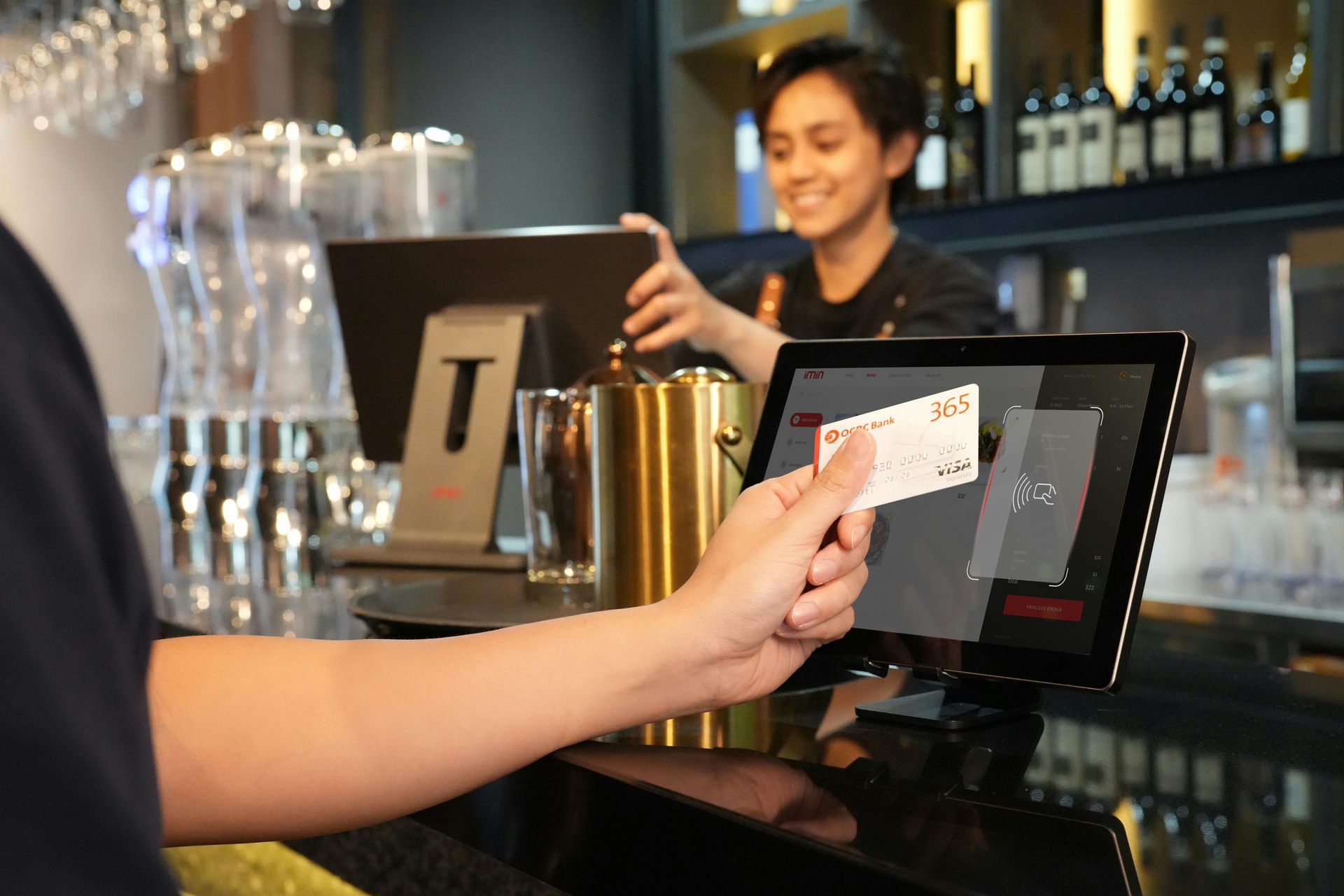
Customer pays at a café counter with a card while a barista smiles behind the register.
By Admin • November 3, 2025
What We Recommend for Your Business
Hand holding a card to a contactless reader near a black sign reading “CONTACTLESS DIAL 3-1-1”
By Admin • November 3, 2025
Not Really Sure what Payment Processing is? Don't worry we are here to help!