Dual Pricing vs Surcharge: Which Fee Recovery Strategy Fits Your Business?

Admin • September 7, 2026

Share this article

TL;DR: Dual pricing (also called a cash discount program) shows cash and card prices up front so customers see the card total before they pay. Surcharging keeps a single menu or ticket price and adds a separately disclosed fee when someone pays by credit. Debit is handled differently, and cash stays unaffected under Monument's framing. On Monument's pricing page, Dual Pricing / Cash Discount is positioned as recovering up to 100% of card processing costs with a flat monthly subscription. Surcharging is positioned at 40-60% savings. The better fit depends on your customer mix, POS, and state rules. Monument reviews compliance before recommending either path, and traditional processing still makes sense when you do not want fee recovery at checkout.

This article is general information for business owners, not legal advice. Surcharge and dual-pricing rules vary by state. Monument reviews compliance before recommending a program.

Walk into almost any store that accepts cards and you can feel the tension at checkout: someone is paying for card acceptance. Either you absorb it, you bake it into every price, or you use a fee-recovery model so card-paying customers share more of that cost. Operators usually land on the same fork: dual pricing or surcharging.

Both aim at the same outcome (lower what your business nets out for card acceptance), but they feel different at the counter, on the receipt, and for debit and cash customers. Monument Payments treats pricing structure as part of the payment strategy, not a one-size rate sheet. The comparison below is meant to help you ask better questions before you change signage or POS settings.

Why this decision matters

Most owners shop terminals and POS first and pricing structure second. That order often locks in unnecessary cost, or worse, a fee-recovery setup that was never reviewed for your state, your card mix, or your software.

Monument's pricing overview groups fee recovery into two paths: surcharging and dual pricing / cash discount, with traditional processing as a third strategy when you prefer not to add a customer-facing fee or dual price. Many businesses also combine approaches (for example, fee recovery in person plus ACH for invoiced or recurring payments). Choosing between dual pricing and surcharging is usually the first fork if your goal is offsetting card costs at the register.

What dual pricing (cash discount) actually means

On Monument's site, dual pricing and cash discount describe the same pricing philosophy with different display methods. In plain terms: customers see a cash (or non-card) price and a card price, or, under Visa's published guidelines, an approved display method such as showing the card price wherever prices appear. When they are ready to pay, the card total is already visible. You are not adding a surprise line at the end of the sale.

That transparency is the point. Shoppers decide how to pay with the cost of card acceptance already reflected in the numbers on the shelf, menu, or screen. Monument configures the display method for your business type and POS environment. As published on the pricing page, Dual Pricing / Cash Discount is positioned as recovering up to 100% of card processing costs, with one flat monthly subscription and unlimited processing:

  • Starter - Up to $5,000/month - $25/month
  • Growth - $5,000-$10,000/month - $50/month
  • Enterprise - $10,000+/month - $75/month

Those dollar figures are Monument's published Dual Pricing tiers on that page, not a custom effective-rate promise for your statement. Implementation typically includes pricing display setup, staff training, and a check that the approach aligns with Visa's published compliance guidelines as Monument describes them.

Dual pricing tends to fit retail-style environments where listing two prices (or an approved card-price display) is practical, such as convenience, specialty retail, and similar high card-volume counters. For the surcharge side of the same decision, see Monument's hybrid / surcharge program page alongside the shared pricing overview.

What surcharging actually means

Surcharging keeps a single posted price for the goods or service, then applies a separately disclosed fee when the customer chooses to pay by credit card. Debit is handled differently under network rules and Monument's program framing: debit and cash customers are not treated the same as credit card customers at checkout. As published on Monument's pricing page, surcharging is positioned at 40-60% savings on processing cost, which is not the same "up to 100%" framing used for Dual Pricing / Cash Discount.

Because the fee appears at payment time, disclosure, signage, and receipt formatting matter. Monument describes compliance review, POS configuration, signage, and receipt line-item presentation as part of a handled implementation, not a DIY toggle. The hybrid-program page is Monument's surcharge-oriented program URL for that model.

Surcharging often fits service, professional, healthcare, and B2B-style checkouts where dual shelf or menu prices are awkward, and where exempting debit (when the system identifies card type correctly) matches how you want the counter to feel.


Dual pricing and surcharging side by side

Use this section as a practical comparison, not a legal checklist. Rules and network requirements change. Monument's published stance is that it reviews compliance before implementing either program.

Customer experience

  • Dual pricing: Shoppers see cash vs card economics before they commit. There is no separate "fee added" moment at the end if the card price was already displayed.
  • Surcharge: The base price looks the same for everyone until credit is selected; then a disclosed fee is added. Clear verbal and printed disclosure reduces pushback; unclear disclosure creates it.

Staff training matters for both. Monument calls out staff coaching as part of deployment because how you explain the program often matters as much as the math.

Debit and cash handling

  • Dual pricing: The card price generally applies to card payments; cash (and other non-card methods, depending on how you configure the program) maps to the lower displayed price. Exact POS behavior should be configured and tested, not assumed.
  • Surcharge: Credit can carry the disclosed fee; debit is handled differently and is not surcharged the same way under the program framing Monument uses. Cash stays on the unaffected path.

If a large share of your volume is already debit or cash, the two models will feel very different in monthly results. That mix is one of the first things a serious evaluation should quantify.

Compliance and disclosure

Both models carry disclosure and implementation obligations. Monument's pricing FAQ states that surcharging and dual pricing rules vary by state, that some states prohibit surcharging on credit cards, and that Monument reviews state-specific regulations and will not recommend a non-compliant program for your jurisdiction. Do not treat a blog post as a state-law chart. Confirm with a compliance review for your location.

On the operational side, expect signage, receipt formatting, and POS rules that correctly identify when a fee or card price applies. Surcharge implementations also involve processor and network notification timelines that Monument handles as part of setup. Dual pricing emphasizes approved display methods and Visa guideline alignment as described on site.

When each tends to fit

  • Often leans dual pricing: Shelf, board, or menu can show cash vs card (or approved card-price display); retail / quick-serve browsing; comfort with card vs cash presentation; published positioning of up to 100% of card processing costs recovered plus flat monthly Dual Pricing tiers on the pricing page.
  • Often leans surcharge: Single price on estimates, invoices, or service tickets; service writers, professional offices, B2B; debit exempt from a checkout fee; published positioning of 40-60% savings on the pricing page.
  • Hospitality nuance: Menu engineering and guest communication need extra care. Pair with the right restaurant and bar POS workflow if you run foodservice. Presentation and training still decide guest reaction either way.

Neither path is a guarantee. Average ticket, card mix, industry norms, and state rules can flip the recommendation.

When traditional processing still makes sense

Fee recovery is not mandatory. Monument's Traditional Processing path is for operators who want transparent acceptance without a dual price display or a disclosed credit fee at checkout. As published on the pricing page, Traditional is positioned at 10-15% savings, with a $25 flat monthly subscription and unlimited processing, and a custom structure (interchange-plus, flat-rate, or tiered) because Monument does not publish a universal rate.

Traditional can be the right answer when:

  • Your brand or customer base reacts poorly to dual prices or checkout fees.
  • Your state or industry posture makes fee recovery a poor fit after compliance review.
  • You need predictable merchant-side pricing and prefer to manage margin in product or service pricing instead of at the tender screen.

Details live on the traditional program page and the shared pricing overview. ACH and eCheck remain separate tools for bank-to-bank payments when cards are the expensive path on large or recurring tickets. Ask about them in evaluation rather than forcing every dollar through fee recovery.

How Monument evaluates and implements

Monument's public process is straightforward: Evaluate, Recommend, Deploy, then Support (white-glove). Applied here, that usually looks like:

  • Evaluate. Review statements, volume, average ticket, card mix, industry, POS, and customer behavior. Confirm state constraints for fee recovery.
  • Recommend. Dual pricing, surcharging, traditional, ACH, or a combination, based on outcome for your operation, not a default pitch.
  • Deploy. Configure POS/pricing display or surcharge logic, signage, receipts, processor setup, and staff training. Monument describes this as handled implementation, not a binder of DIY steps.
  • Support. Ongoing effective-rate and program review so the structure still matches how you actually process.

Credentials and claims Monument publishes alongside pricing include ETA Certified Payment Professional on staff, PCI DSS Compliant (as claimed on pricing), serving businesses since 2014, 500+ merchants served, Colorado / Western Slope coverage, and no long-term contracts (as claimed).

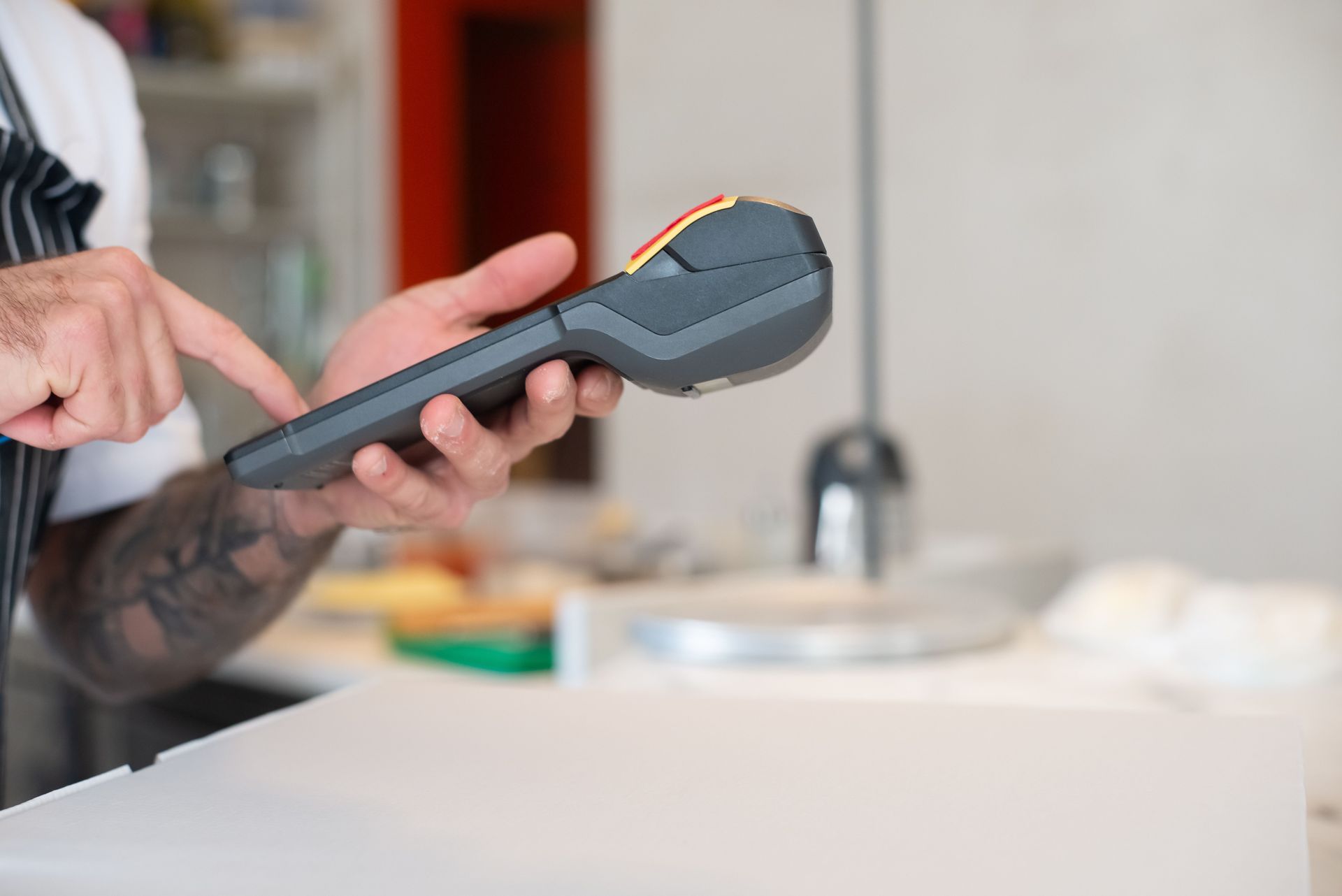
Payment terminal processing a card for dual pricing and surcharge fee recovery

Next step

If you are weighing dual pricing against surcharging, you do not need to guess from a comparison chart. Bring a recent processing statement (or a clear picture of monthly volume and average ticket), and Monument can map the options to your mix, your POS, and your state's rules, then implement the path that fits.

Request a free evaluation or call Monument Payments at (970) 239-1307.

Recent Posts

Hand holding a payment terminal during an in-person card payment at a restaurant counter for a local
By Admin September 8, 2026
Learn how interchange plus pricing works, compare flat-rate and tiered models, and see when transparent processing fits your business.
Hands holding a credit card near a laptop while typing, suggesting online shopping
By Admin September 1, 2026
Learn how a virtual terminal works, what keyed payments cost, PCI DSS responsibilities, and how to choose the right option for phone and invoice payments.
Two desktop computers on a wooden desk in a bright office workspace
By Admin November 3, 2025
Why We Built a New Website Designed Around Our Clients When we set out to rebuild our website, we started with one goal: make it easier for business owners to find the information they actually need. Over the years, we’ve heard feedback from clients across Western Colorado , Eastern Utah , and Northern New Mexico — they wanted faster access to pricing, clearer information about payment options, and a simpler way to get local support. Our new site delivers al l of that. It’s faster, easier to navigate, and built to work seamlessly on any device — whether you’re behind the counter or on the go. Streamlined Navigation We’ve organized our services into intuitive sections like Pricing , POS Systems , and Payment Programs so you can quickly find the solutions that fit your business. The homepage also highlights what sets Monument apart — transparency, local expertise, and flexible options for every type of business. What’s New on the Site Clear, Transparent Pricing One of the biggest updates you’ll notice is our transparent pricing page . It breaks down each of our programs — Dual Pricing , Surcharging , and Traditional Processing — in plain language. No fine print. No hidden markups. For example, many local shops in Montrose have already switched to our Dual Pricing model, saving up to 100% of their credit card fees while staying fully compliant with c ard network rules. The new site explains exactly how those savings work so you can decide what’s best for your business. Detailed Service Pages Each of our major solutions now has its own page — whether it’s Clover POS , Exatouch , ProCharge , or mobile payment processing. These pages walk you through the features, use cases, and benefits of each option, so you can easily compare and find what fits your operation. One of our retail partners in Grand Junction recently said that the new POS comparison section helped them finally understand which system would handle their inventory and online orders best. That’s the kind of clarity we aim to provide every day. Educational Resources and Blog We know that payment processing can feel overwhelming — so we’ve built a resource center to make it simpler. Our new blog and guides explain key topics like how surcharging works, the difference between merchant accounts and gateways, and how to protect your business from fraud. Our goal is to give you more than just processing — we want to empower you with knowledge that helps your business grow. What Th is Means for Local Businesses Easier Access to Local Support We’ve always taken pride in being local — serving communities throughout Western Colorado , Eastern Utah , and Northern New Mexico . The new website makes connecting with us easier than ever. Whether you need to schedule a consultation, request a quote, or troubleshoot a terminal, you can reach us directly through simple contact forms or by calling our Grand Junction office. As one of our restaurant clients in Durango put it, “It’s refreshing to work with a payment company that actually picks up the phone.” That’s the standard we’ve built this new website around. Trust and Transparency at Every Click The payment industry can be filled with confusing rates and long-term contracts — but Monument Payments has always done things differently. Our new site mirrors that philosophy by being upfront, easy to navigate, and completely transparent. Our Commitment to Innovation Our website isn’t just a redesign — it’s a foundation for the future. We’ve added new features to highlight emerging payment technology like contactless terminals , EMV chip readers , and integrated eCommerce solutions . Soon, we’ll roll out interactive tools that help businesses compare systems and calculate savings instantly. But even with all this innovation , one thing won’t change: our commitment to real, personal service. Whether online or in person, Monument Payments will always be here to make sure your payment solutions work the way your business does. Explore the New Site Today We invite you to explore the new Monument Payments website and see how much easier we’ve made it to understand and manage your payment processing needs. If you’re ready to simplify your payments, reduce costs, and work with a local team that puts honesty first, visit us online or call (970) 239-1307 to schedule a free consultation. Monument Payments — Payment Processing that works the way you do.
Customer pays at a café counter with a card while a barista smiles behind the register.
By Admin November 3, 2025
What We Recommend for Your Business
Hand holding a card to a contactless reader near a black sign reading “CONTACTLESS DIAL 3-1-1”
By Admin November 3, 2025
Not Really Sure what Payment Processing is? Don't worry we are here to help!